When you think of early childhood education, images of children playing with blocks, engaging in pretend play, or exploring outdoor spaces may come to mind. This is no coincidence. Play is not just a way for children to pass the time—it is one of the most effective ways for them to learn. Play-based learning is a research-backed approach that nurtures cognitive, social, emotional, and physical development in young children. At The Gillingham Nursery, we embrace this philosophy to create an engaging, stimulating, and enriching environment for every child.
In this article, we explore the science behind play-based learning, its benefits, and how it is integrated into daily activities at the nursery.
The Science Behind Play-Based Learning
Children are natural learners, constantly exploring and making sense of the world around them. Research in early childhood development highlights play as an essential vehicle for learning. Studies have shown that play:
Stimulates brain development by forming neural connections.
Encourages problem-solving, creativity, and decision-making.
Strengthens memory and information retention.
Enhances emotional regulation and resilience.
Fosters communication and social skills.
Renowned psychologist Jean Piaget emphasized that play allows children to actively construct knowledge rather than passively receive information. Similarly, Lev Vygotsky’s theories suggest that play helps children internalize social norms and language, contributing to their holistic growth.
The Key Benefits of Play-Based Learning
1. Cognitive Development
Play-based learning enhances cognitive skills by engaging children in hands-on, meaningful experiences. Activities such as building with blocks, sorting objects, and engaging in role-play scenarios promote:
Critical thinking and problem-solving.
Spatial awareness and pattern recognition.
Early mathematical and scientific reasoning.
Creativity and imagination.
2. Social and Emotional Growth
Through play, children learn how to navigate social interactions, regulate emotions, and develop empathy. Group activities, collaborative storytelling, and pretend play encourage:
Sharing, turn-taking, and cooperation.
Emotional expression and self-regulation.
Conflict resolution and negotiation skills.
Understanding different perspectives.
3. Language and Communication Skills
Play provides a rich environment for language acquisition and communication. Whether engaging in make-believe games, singing songs, or listening to stories, children develop:
A wider vocabulary and stronger sentence structures.
Improved listening and comprehension skills.
Confidence in expressing thoughts and emotions.
The ability to follow instructions and engage in discussions.
4. Physical Development
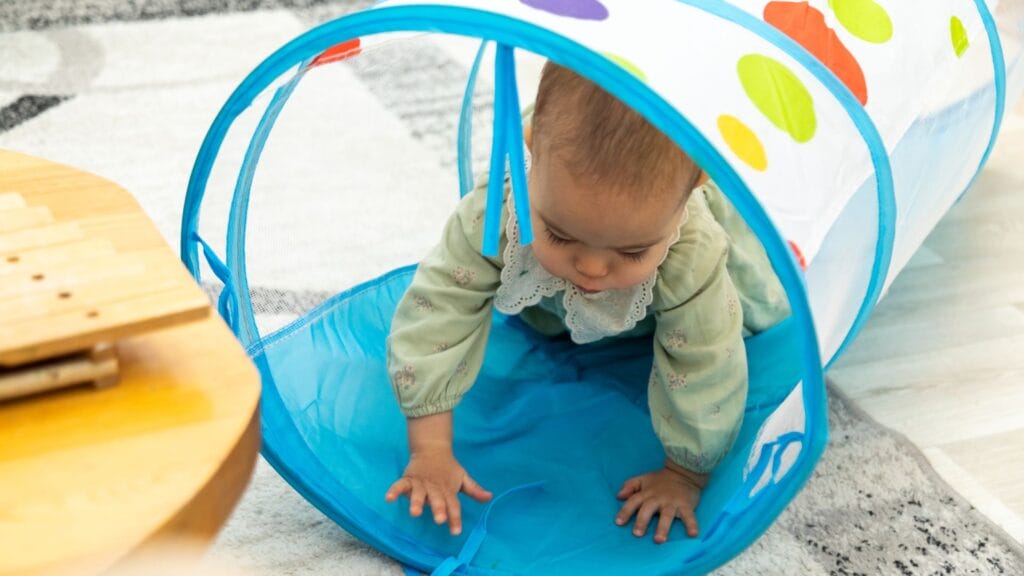
Play involves movement, which is crucial for developing motor skills. Activities such as running, climbing, drawing, and manipulating small objects contribute to:
Gross motor skills (balance, coordination, strength).
Fine motor skills (grasping, writing, cutting).
Hand-eye coordination and dexterity.
Overall physical well-being and fitness.

How Play-Based Learning is Incorporated in Our Nursery
At The Gillingham Nursery, we integrate play into every aspect of our curriculum. Our approach ensures that children learn through joyful, meaningful experiences. Here’s how:
1. Structured and Free Play
We balance guided activities with unstructured play to allow children to explore their interests. While structured play introduces new concepts, free play fosters creativity and independence.
2. Learning Through Storytelling and Role-Playing
Dramatic play areas encourage children to step into different roles—doctors, shopkeepers, chefs—developing their imagination, language skills, and social understanding.
3. Hands-On Exploration and Sensory Play
Children engage in activities like water play, sand play, and arts and crafts, which stimulate their senses and enhance their cognitive and motor skills.
4. Outdoor Learning and Nature Exploration
Outdoor play allows children to discover the natural world, improving their physical development and fostering a sense of curiosity and environmental awareness.
Conclusion
Play is not just a pastime—it is a powerful educational tool that shapes young minds. By embracing play-based learning at The Gillingham Nursery, we create an environment where children develop essential life skills while having fun. This approach ensures that learning is engaging, joyful, and meaningful, laying a strong foundation for future academic and social success.
If you’re looking for a nurturing nursery that prioritizes play-based learning, we invite you to visit The Gillingham Nursery. Contact us today to learn more about our programs and see how we make learning come alive through play!